
Microsoft Community Insights Podcast
Welcome to the Microsoft Community Insights Podcast, where we explore the world of Microsoft Technologies. Interview experts in the field to share insights, stories, and experiences in the cloud.
if you would like to watch the video version you can watch it on YouTube below
https://youtube.com/playlist?list=PLHohm6w4Gzi6KH8FqhIaUN-dbqAPT2wCX&si=BFaJa4LuAsPa2bfH
Hope you enjoy it
Microsoft Community Insights Podcast
Episode 51: Empowering Women in Tech with Samantha St-Louis
Use Left/Right to seek, Home/End to jump to start or end. Hold shift to jump forward or backward.
Tech does not just need more women, it needs more women who feel free to show up as themselves. We sit down with Samantha St Louis, VP of AI App Innovation and a Microsoft MVP, to talk about what it really looks like to build an AI career, lead AI strategy, and navigate a male-dominated industry without shrinking your personality to fit the room.
Her career journey is the proof point. She starts as an nurse then moves into early health tech, builds her own company, and later levels up through Microsoft Learn and certifications like Power Platform Fundamentals before going deeper into AI engineering and AI architecture. Along the way, she shares candid stories about bias, the quiet gatekeeping that keeps people out, and why soft skills are a real competitive advantage in modern tech.
Welcome And The Big Theme
SPEAKER_01Hello, welcome to Microsoft Community Insights Podcast where we share stories to help you keep up to date with Microsoft. In this episode, we'll dive into empowering women to feed in tech with guests Samantha St. Louis. Could you please introduce yourself?
SPEAKER_00Hi, everybody. My name is Samantha St. Louis. I am VP of AI App Innovation at Macera, as well as an MVP in the AI service space and foundry and an MCT.
SPEAKER_01Okay. So that's before we dive into the topic. Do you want to just introduce like uh what your day job as a MVP and in working in AI?
Building AI Strategy That Pays Off
SPEAKER_00Sure, of course. So as I mentioned, I'm VP of AI App Innovations at Atmo. Um and so what that means is I work very closely with our go-to-market team, our executive team, our sales team, our solutions architect team, our delivery team, um, so that we have a cohesive strategy as to how we want to go to market with AI. And most importantly, how we want to service our clients so that their AI innovations are fruitful, uh, full of value, and help them grow as we are in the era of AI. And, you know, you kind of get on the boat or you drown, right? So we want to help our clients be successful. Um, most of our clients, what they want to achieve with AI is they want to be able to grow every single year with the people that they have today. You know, a lot of them are very happy with their teams, they're very happy with their employees, they're very happy with the group of people that they have formed and the caliber of people. And they don't want to disrupt that ecosystem. So they want to say, you know, how can we grow 15% year after year with the same people by using AI to get rid of very tedious tasks and allow our people to be focused on the tasks and the skills that they are truly amazing at and the reason you know why they were hired. Nobody was hired because they write great emails, right? You're hired because you know something or you can do something uh that other people can't.
SPEAKER_01Yeah. Lots of time I hear the terms called AI first comp uh company. They want to like make AI co op the services, so every part will have AI.
SPEAKER_00Well, so AI is kind of like this great equalizer where a small company can actually compete with pretty large companies if they're leveraging AI really well, and they have a arguably smart, uh, a small group, but a really smart group of individuals. And so um, that for me is what you know AI first tends to mean. And then the other part of that is um when a client comes to us and says, you know, we want to innovate with AI, we are forced to take a look at their infrastructure. We're forced to take a look at their data, we're forced to take a look at their security. So it sort of makes people and organization go back and be like, okay, what have we not been doing super well? You know, what does our cloud look like? What does our data look like? What do we need to clean up so that we can mature and move into AI in a way that will produce value and be sustainable and scalable?
From ICU Nurse To Tech Founder
SPEAKER_01Okay, so we wind back in time. So we since we're talking about empowered women in tech, we want to talk about your journey. So, how you're how do you start in tech? Where do you did you start as in IT or did you always serious about AI?
SPEAKER_00No, uh I actually started as a nurse, mind you. I started as a nurse clinician in the intensive care unit uh in Canada. And um from there I actually went to work for a private company, which was one of the first health tech companies back in the day. They were very um ahead of their time. They wanted to make the Canadian healthcare system navigable uh via online services because uh in Canada we have you know, quote unquote free health care, but uh the downfall to that is it's extremely difficult to actually access, very difficult to navigate. And when you actually need services, it's very, very challenging. And so they were one of the first companies who um sort of breached that health tech space. And I joined them initially as a uh clinical director, really. So I was really focused on that clinical side. And one of the challenges that we had was there was no software for this sort of thing back then, right? It was very new. And so, if we wanted a solution or a piece of software, we we had to build it, we had to put it together. And uh fast forward a couple of years, I ended up opening my own health tech company, ran that for 10 years, and I was very, you know, picky. And again, every time we needed a software, we needed a solution, I was very unsatisfied with what was in the market. So I would, you know, I would build it. And kind of like most entrepreneurs, when you start, you think you have to do everything, right? So you build your own website, you build your own CRM, you build your own fulfillment centers, like all the things. So that drove me deeper and deeper into technology. Um, and I, you know, acquired a lot of skills, acquired a lot of knowledge, acquired a lot of um statistical knowledge, you know, during my research days. And one faithful day, I entered, I encountered somebody in tech who became a close friend, and she said, you know, you'd be really good at this stuff. And I laughed because in my head, in order to be in tech, you have to start coding at age five, right? And I was like, it's way too late for me to be in tech. What are you talking about? Like, I can't be in tech. And she's like, You're already in tech, you just you don't realize it, but you've been in tech for a very long time. And so um we we joked, and she gave me Microsoft Learn, the website, and she said, just pick a certificate and try it just for fun. And so five days later, I wrote, I think it was the uh Power Platform Fundamentals, which I had no idea what PowerPlatform was, I had never used it before. So I just learned the stuff and made sense, right? It's very user-friendly. I wrote the exam, I passed, and then I brought it back to her. And I remember she said, you know, it would take normally a couple of months, you know, for people to actually learn this stuff and pass. And um, she gave me my first, you know, hard tech opportunity. And next thing you know, I got deeper and deeper and deeper into AI, started doing AI engineering for a bunch of clients, moved into AI architecture. Um, and I have you know, long history of business. So that, you know, all tied together.
SPEAKER_01Oh, so you you took power platform certification and they lead it to AI?
SPEAKER_00I, you know, I ended up doing the power platform certification because I had no idea what this learn Microsoft website was. And so I just read, I was like, well, that sounds interesting. Let me do that. Um, and so after I did that, I was like, that was great. But I went back and uh I saw that there was a lot of stuff about AI, and I had already been playing with AI within my own business, right? To service people, and we had automated a lot of things via AI. So um dove into that, knew a lot of it already. So it was just about getting very familiar with the Microsoft um toolkit.
SPEAKER_01Okay, yeah, that's quite amazing because you could you go from being a nurse to know, but you still have some transferable skills, whether in as a nurse into like when you're moving to IT now, working in AI.
SPEAKER_00It had been like you know, 20-something years of me being, you know, in within the IT world just because it was a necessity uh in my business, right?
SPEAKER_01Uh okay. So you already had experience of in the uh some of the skills already, some technical skills already when you were a nurse and you just wanted to take up new challenges by doing platform. Okay.
Authenticity As A Tech Superpower
SPEAKER_01So had uh so what what do you think you in your experience is empowered women in tech? Do you just be able to just motivate people? Also, what's the terms in your meaning?
SPEAKER_00Um, empowering women in the world of tech is a lot, you know, more complicated than than just motivating people. Um, it's recognizing that tech is still very much a males field, right? Uh it's a male-dominated arena. And when I started, you know, I had been in my own company in health tech for many, many years. And uh healthcare is also male-dominated, but I was my own boss, so you know, it didn't apply in my ecosystem. Um, and I hired a bunch of moms, and I'm a mom, and so I didn't really live within that daily reality. And so when I transferred to the pure tech world, if you will, right? That's a very male-dominated field. And um, you'll be surprised, but it's actually a couple of women in the tech field who made it harder for me because they told me, well, you know, this is a male-dominated arena. You have to mold yourself to the male-dominated arena. So, you know, wear um graphic tees, wear jeans, don't wear a lot of pink, don't wear a lot of purple. Make sure your branding is very boring, you know, blue and white and black. And for me, because I had been in corporate for so many years, I had learned that um what made me stand out in the room, what made me valuable to the organizations that I worked at, were very feminine traits in a sense, where um I was able to think about the entire organization. Instead of narrowly focusing on one area, I took the entire organization into account when I built strategies, when I would build out systems, when I built out solutions. And so when I entered tech and I was told to sort of like fit in, I was like, well, doing that is I'm not gonna provide as much value as I can. I'm gonna be like, you know, dimming my light, if you will. I'm not gonna be leaning into uh the room. And so I decided to do the opposite. And you'll notice my website, and you know, my branding is it's purple and it's pink and it's you know, extremely feminine. My chair, you know, is pink. And I had an enormous amount of men in technology congratulate me for it, actually, and be like, oh my gosh, this is great. This is a breath of fresh air, this is a different way of approaching things, this is a different way of diagnosing, you know, issues in the tech industry. It's a different way of solutionizing and you know, being truly, you know, authentic to the skills that you've acquired over the years, and then obviously many women who were great. So I think one of the things that um we we don't realize is yes, it's a very male-dominated arena. Yes, there's gonna be men along your career, I guarantee you, who are going to be sexist. It's gonna happen. It was part of my early careers, it is part of being a woman and it, you know, sucks and it gets better every single year. However, you have to make sure that you do not become one of this the women who molds themselves into the male world to the point where you then make it actually harder than the men do at making other women enter tech. I think we um we we take some of the difficulties that exist in the tech world and we try and fix them so badly, we try to like fit in so badly that we inadvertently make it harder than it needs to be. Um, no, you don't need to wear graphic t-shirts and look like a dude to be in tech. I mean, if you want to, cool, right? No problem with that. Um, but I'll take Donna Sarka as an example. That woman is in a fabulous dress every single time I see her. She's wearing jewelry, her hair is, you know, amazing. She does not dim her light at all. And it's one of the great things that I I adore about her, and I barely know her.
Bias At Work And Real Allies
SPEAKER_01Yeah. So is there any challenge do you see when you work in an environment that's more male dominant than female that you see?
SPEAKER_00Um, I'd say in this day and age, at the age that I am, um, I don't encounter as many of those challenges just due to um, I'm older, you know, I I have five kids. I think um men and women can sense that, you know, in people. And so they don't they don't like to mess with people that they know that they can't mess with. So it's just it's not something that I encounter as much. I think this is um, I I mean, I still do encounter, but the frequency at which I encounter it versus when I was 20 is is a huge difference. Um, it still happens. Um, you know, being told that you're gonna be assigned to a project because the business client is woman-led, and so you'd be a good fit because of your chromosomes, uh, comments about what to wear and how to dress and you know, your makeup, and comments from women who tell you, you know, don't be too feminine and uh that sort of thing. It still happens, it definitely still happens. Um, but for my part, honestly, I have to say that in my community of Microsoft specifically, I have a ton of male friends, you know, you including. And they are the most amazing people and they have elevated my career, they have elevated me, they have motivated me, they have been kind to me, they have been uh recognizant of my skills and my knowledge. They have never spoken to me or treated me like I knew less or I was less capable. Um, they've never commented on my appearance, like honestly, for me, and maybe I'm privileged in that way, but since I have been in the tech world, I have encountered a handful of people that have given me sexist comments, which I mean, I'm older, so I really I basically put them back in their place and moved on, right? Um, but I have a huge network of incredibly supportive men in technology. I think that um I don't know if it's Microsoft specifically, because I am very ingrained into that world. But um people are just really great within that the tech world. They're very like they're curious, they're very growth-oriented, um, very friendly, very, you know, uh community-oriented. So personally, I you know, I'd love to say, yeah, let's whine about it and let's complain about I have not experienced it as much in the NCT MVP, you know, male tech community. I work, you know, with um within a comp uh a company that obviously has you know more men than women.
SPEAKER_01I think at my place I had a one of the I can solution architect as a lady, and then the rest of them is like a male. So the ratio is is you can see it's there.
SPEAKER_00The ratio is that is a problem. And so when I speak at a conference, for example, I remember startingly there was one conference um in Dallas I went to, there was 250 people in the room. There was one table with four women. That's it. Everybody else, you know, was guys. Um, and I remember thinking, I need to knock this out of the park. I need to show those ladies, because they were all very young, um, that they belong, you know, in
Getting Girls Into Tech Earlier
SPEAKER_00this room. And so I think part of it too is just we need to get to girls younger and tell them that technology is a great career option and it is an opportunity. Because for a lot of women that I know, once they are in the tech world, you know, they're treated extremely well. It's just that I don't remember once in school being told that tech was a possibility. Even though I was great at computer science, even though I was I was great at math, even though I was great in statistics and in science, it was just not, you know, you go in medicine, you go in nursing, you go to veterinary school, that sort of thing. But um, nobody tells you, have you considered tech? So I think that if we get to um girls really when they're younger, and we encourage them to explore technology as a possible career, um, that's gonna help a lot.
SPEAKER_01Yeah, plus you don't really need to be very, very smart to be in tech. Someone can, as long as you got the people skills, soft skills, the any skills is transferable into tech and when it's learned.
SPEAKER_00Yeah, tech has this long history of gatekeeping, right? Where we make things sound and look more complicated than they actually are, making people believe, you know, that they don't belong in tech. But in reality, um, we have a lack of soft skills in tech, right? A solutions architect, a really good solutions architect, has great social skills and and we need more of that. Um, so you know, I have I have five kids. I have four boys and one girl, still male-dominated within my house. And um, you know, I just finished organizing their summer camps for the summer. So um nine weeks of themed, you know, individual camps. And somebody asked me, oh, are they all, you know, doing the same camp? And I said, Yes. They're all doing, you know, a robotics camp, they're all doing camp, they're all doing a medical doctor camp, they're all doing a circus camp and a sports ultimate camp and a language arts camp. And, you know, my boys need to learn female traits, if you will. And my girl needs to learn, you know, the other way around. I forced my boys to go to gymnastics camps over um spring break because they kept saying, oh, it's a girl thing. I was like, you have no idea what you're talking about. And they went to gymnastics camp and they came back and they're like, that was awesome.
SPEAKER_01I guess both of them, the boys and the girls, can learn from each other and then later on they'll want to know which direction they want to go to their career, whether in tech, whether it's a doctor or anywhere else with sports. Exactly. So is there anything that you're doing at the moment to drive people women into tech?
Career Pathways And AI Investment
SPEAKER_00So um I'm working on a couple of projects. Um I am wanting to uh first of all, I am writing a book right now.
SPEAKER_01Yeah.
SPEAKER_00I'm writing a book on um AI capital allocation. So that's more around, you know, um centered towards organizations who want to innovate with AI, who want to invest in AI and making sure that it is sustainable, scalable, and value-driven um over the decades to come, right? We don't want this to become a money pit. We want it to be, you know, a multiplier. And the other thing that I'm working on is the possibility of uh creating some content around how to build a career in tech. Because uh tech is one of these arenas where you can take a traditional route, right? You can do a bachelor's in computer science and specialize, um but it's a little less common.
SPEAKER_01Yeah, the the best route is like do like a boot camp or like training or something, academy.
SPEAKER_00Exactly. So I'm trying to put together um some sort of like crash course on here are the different ways that you can break into the tech world depending. On if your early career, or maybe you're doing a career shift, right? And you've been in healthcare or you've been in sales or whatever the case may be, right? And you want to shift into technology. And the best, easiest, and most straightforward way of doing it. Um, and one of the things I explain to people when I do speak to them about switching their careers is everything has a cost, right? I had this conversation with my husband recently because he um he's back in school, if you will, to become a train conductor. And I said, everything has a cost, right? If you want to make a good income and you want to have a great schedule and you want to work from home and all of these things, you're gonna have to study, right? It might not be in a traditional university, but it's gonna be Microsoft Learn, it's gonna be a boot camp, it's gonna be, you know, on your own time. You're gonna have to study, you're gonna have to learn skills. Um, if you don't want to study and you don't want to learn skills, but you still want to make a good income, it's usually gonna be work where um it's either really crappy work, right, that nobody wants to do, or uh like plumbing, right? You still have to go to school, but it's just it's it's work that a lot of people don't want to do, or linemen um or my husband, you know, being a train conductor, they have horrifying schedules, but they make good money without having to study a whole lot because that's the trade-off. So everything has a trade-off. And and the trade-off with tech is you need to study, and you not only need to study to get into tech, um, you need to study long term for your the entire length of of your career, right? I have to devote time every single day to um stay up to date with my skills, especially with AI. I mean, everything is you know constantly changing.
SPEAKER_01So yeah, I guess one of the skills that everyone will need to have is that you need to be more of an interest. So you need something that in that year, like for aim to be interesting to study, is you can study it and then you'll be like worn out and not interested into it anymore.
SPEAKER_00Mm-hmm. Absolutely. Well, it's it's one of the great things about tech is there's so many, there's so many arenas that you can specialize yourself into. You're not stuck in in one place. You can spend 10 years in SharePoint and then shift gears to something else, right? Yeah, nobody's gonna say no, right? A lot of those skills are transferable and a lot of that um knowledge base is available for free online. Um and tech changes dramatically day to day to day. So there's always more to learn and try and develop.
SPEAKER_01Yeah, sometimes I like to tell people that you in order to to learn something, try to make it fun. So, like develop a like a something and like an application that's part of your hobby. So you were willing to uh learn more from it.
SPEAKER_00Absolutely, absolutely okay.
Lifelong Learning And Final Takeaways
SPEAKER_01So as we come in into this episode, is there any last minute thought on how you can drive people like more women into tech?
SPEAKER_00Um, I think if women um show up in technology, may that be in conferences, may that be in the boardroom, maybe in meetings, may it be on LinkedIn. If women show up as their their true self and they don't feel the need to fit themselves into a mole, right? And they allow themselves to um take place, right? It's just going to create more space for women to feel comfortable, you know, to come into the world of tech. And, you know, you have to think about there were women in tech 20, 30 years ago who started where there was literally no women, you know, in tech, and they they made that space for me, right? And all the people, all the women who are in tech today. We have to remember that although we have the privilege that other women have, you know, paved that space for us, we too have to continue in paving that space uh for more women. And I think as parents, right, we have to make an effort to be conscientious of this and introduce it to our children. Um, putting together summer camps, putting together boot camps, putting together any type of resource that introduces kids and young women to the world of tech is beneficial.
SPEAKER_01Yeah. Uh you can always switch career, like come out to not start to do tech like you did, and then go into tech by doing a boot camp, like you said, to develop the skills, because every little skills they pick up in in workplace are transferable.
SPEAKER_00So absolutely. And I mean, when you think about it, I mean, not everybody, but most people in the workforce today are a lot more tech savvy than the workforce in general, you know, 15, 20 years ago, because operating tech is just part of your daily life. No matter what you do. My mom is uh, you know, significantly older than you and I. Uh, she works in a bank, right, as a financial advisor, and she uses AI, you know, and she uses the Microsoft Suite. She has no choice, right? Everything is done online, and she even uses the system because I remember I worked in a bank um I was significantly younger, and um the the platform that we use to do teller banking was like a command center, it's a black screen, and you enter codes, you enter, you know, commands. Um, and so the people today in the workforce in general have more, not everybody there, you know, there are exceptions, but people have more tech skills. When I started off as a nurse, um, everything was paper charting. There was only one computer in the entire ICU unit. Nobody knew how to open the thing, uh, except that one night secretary that sent in the blood test. And the only thing we used it for was to print the stickers to put on blood files. That's all we used it for. That was it, right? Today, nurses have iPads, so people are just more tech savvy than they used to be. So the jump is is a lot more doable.
SPEAKER_01Yeah, I agree. I guess it's only the only concern when people get older and then they're not aware of like the danger into tech when you're but cybersecurity is a big thing, yeah. Yeah, but as you're young, it it is a good, exciting feel to go and learn because it's it's constantly evolving and stuff, and it's constant it's quite competitive as well in tech. Yes. Okay, uh, thanks a lot for joining this episode, Tamanta. So I hope the viewers learn the the importance of getting more women in tech and how you some of the tips and how you can actually show up and drive more initiative like Samantha Jesus and one of the books. Yeah, so it's a book that you're writing is it be available or is it just not yet.
SPEAKER_00We still have a while to go, it is in process.
SPEAKER_01Yeah, so hopefully by this year or next year. So I'll keep you posted. All right, thank you. Bye.

Podcasts we love
Check out these other fine podcasts recommended by us, not an algorithm.
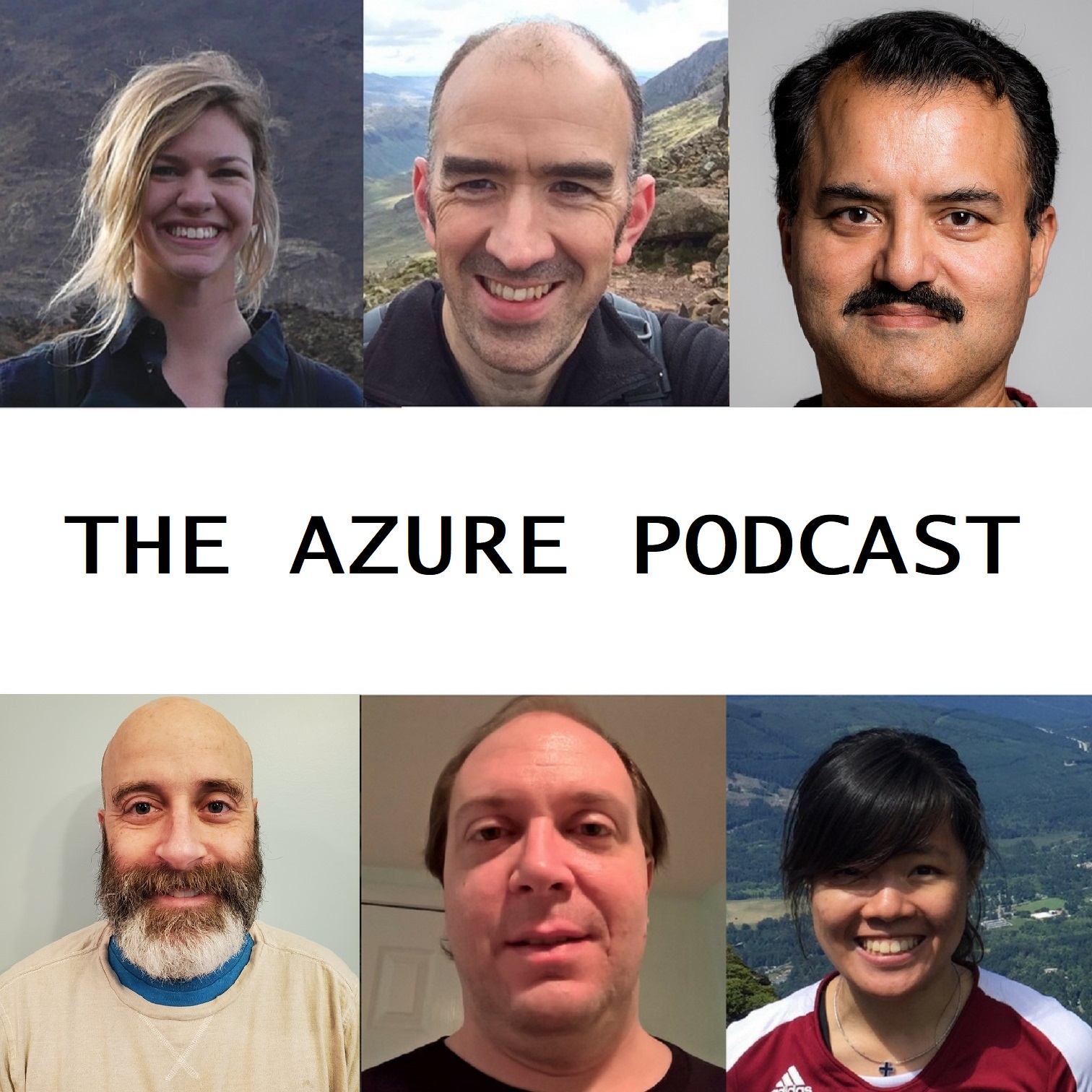
The Azure Podcast
Cynthia Kreng, Kendall Roden, Cale Teeter, Evan Basalik, Russell Young and Sujit D'Mello
The Azure Security Podcast
Michael Howard, Sarah Young, Gladys Rodriguez and Mark Simos